



Gemstone Guide
RUBY
THE KING OF PRECIOUS STONES
Rubies are known for their fiery red hue, which has made them a symbol of passion, power, and prosperity throughout history. Ancient cultures, from the Egyptians to the Hindus, believed that rubies possessed protective powers and even represented the blood of life.
History
As early as 2000 BC, warriors in Burma believed that embedding a ruby in their flesh made them invincible in battle. In ancient India, rubies were called ratnaraj—“king of gems”—and were offered to the gods before being worn. Medieval European knights sewed rubies into their clothing, convinced that the stone would protect them from wounds. The world’s most famous rubies have adorned crowns and swords: the 167-carat “Black Prince’s Ruby” in the British Imperial State Crown is actually spinel, but genuine rubies like the 138-carat Rosser Reeves Ruby (Smithsonian) demonstrate the stone’s enduring prestige. Mughal emperors of India engraved enormous rubies with their names; several survive today in museum collections.
Features
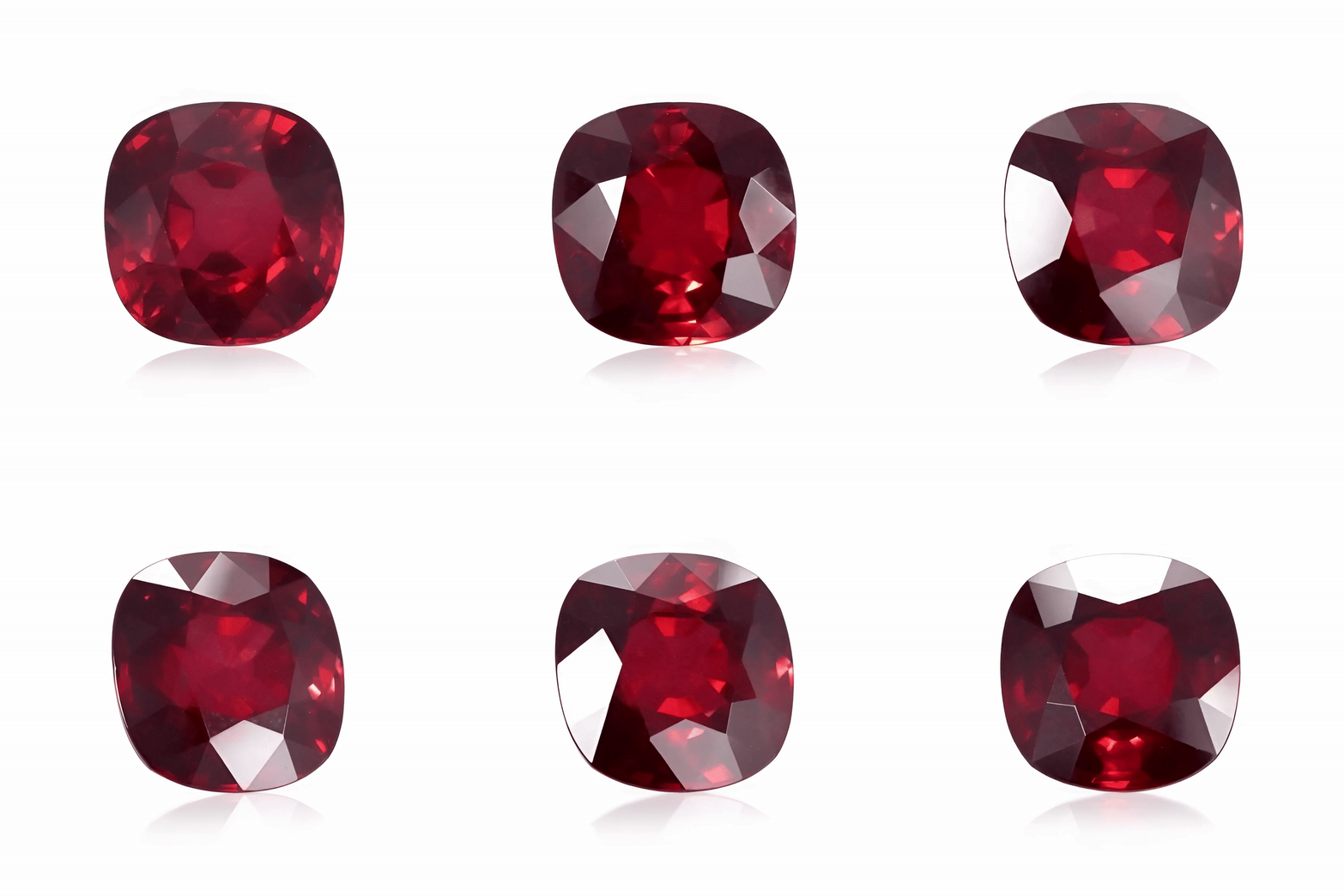
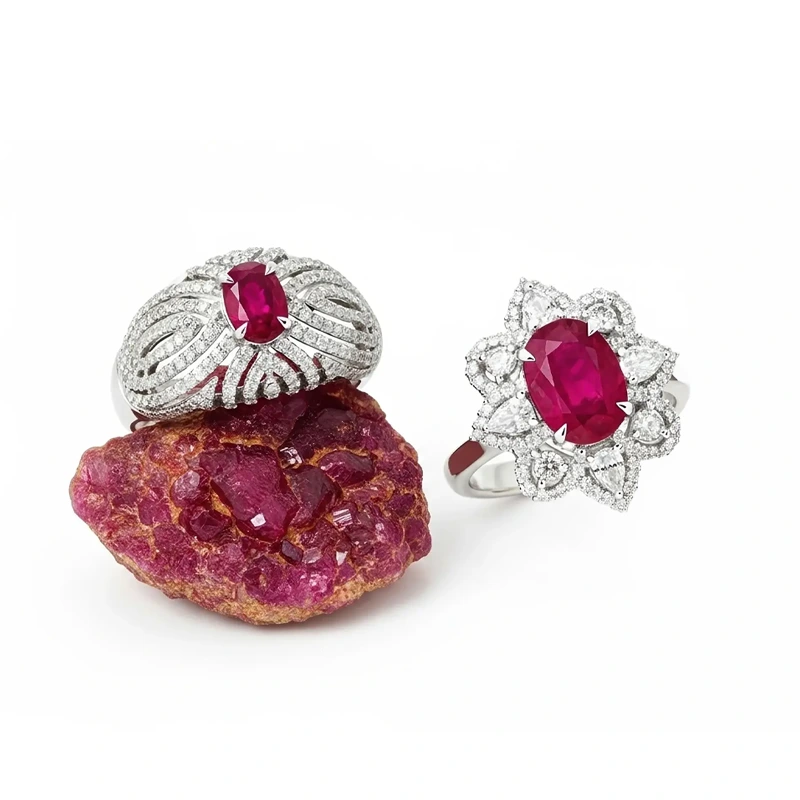
Color and Appearance: The most desirable rubies exhibit a bright, blood-red color—a deep purple with subtle blue undertones. Lighter shades are sometimes called pink sapphires, but true rubies are classified by their dominant red color.Hardness and Durability: With a Mohs hardness of 9 (just below diamond), rubies are extremely hard, making them ideal for everyday wear as rings and pendants.Sources: They are mined primarily in Myanmar (Burma), Mozambique, Thailand, and Madagascar. Ethical mining is increasingly important, with many jewelers now offering conflict-free options.Value Factors: Color is king—intense, uniform red color commands the highest prices. Clarity (fewer inclusions), cut (for maximum brilliance), and carat weight also play key roles. Rubies over 5 carats are rare and valuable. Symbolism and Uses: The birthstone of July, rubies are popular in engagement rings and anniversary gifts. They are often set in gold or platinum to emphasize their warmth.
EMERALD
THE STONE OF QUEENS AND CONQUERS
Emeralds evoke lush green landscapes and have been prized since ancient times. Today, they symbolize hope, loyalty, and new beginnings.
History
The first known emerald mines (circa 1500 BC) were at the Egyptian "Cleopatra's Mines" in the desert east of Aswan, and Cleopatra was known to have adored them. South American emeralds entered Europe after the Spanish conquest of the Inca and Muisca peoples in 1500; the conquistadors were amazed by stones larger and greener than anything seen before. The Mughals of India called emeralds "zamarat" and carved entire verses from the Quran into large crystals - some of these "Mughal emeralds" weighed over 200 carats and are now in museums. In the 19th and early 20th centuries, Russian tsars and Indian maharajahs competed to own the largest emeralds; The Devonshire Emerald (uncut, 1,383 carats) is one of the largest untouched crystals ever discovered. Legend has it that wearing an emerald strengthens memory and reveals truth – which is why it was a favorite of Renaissance scholars.
Features
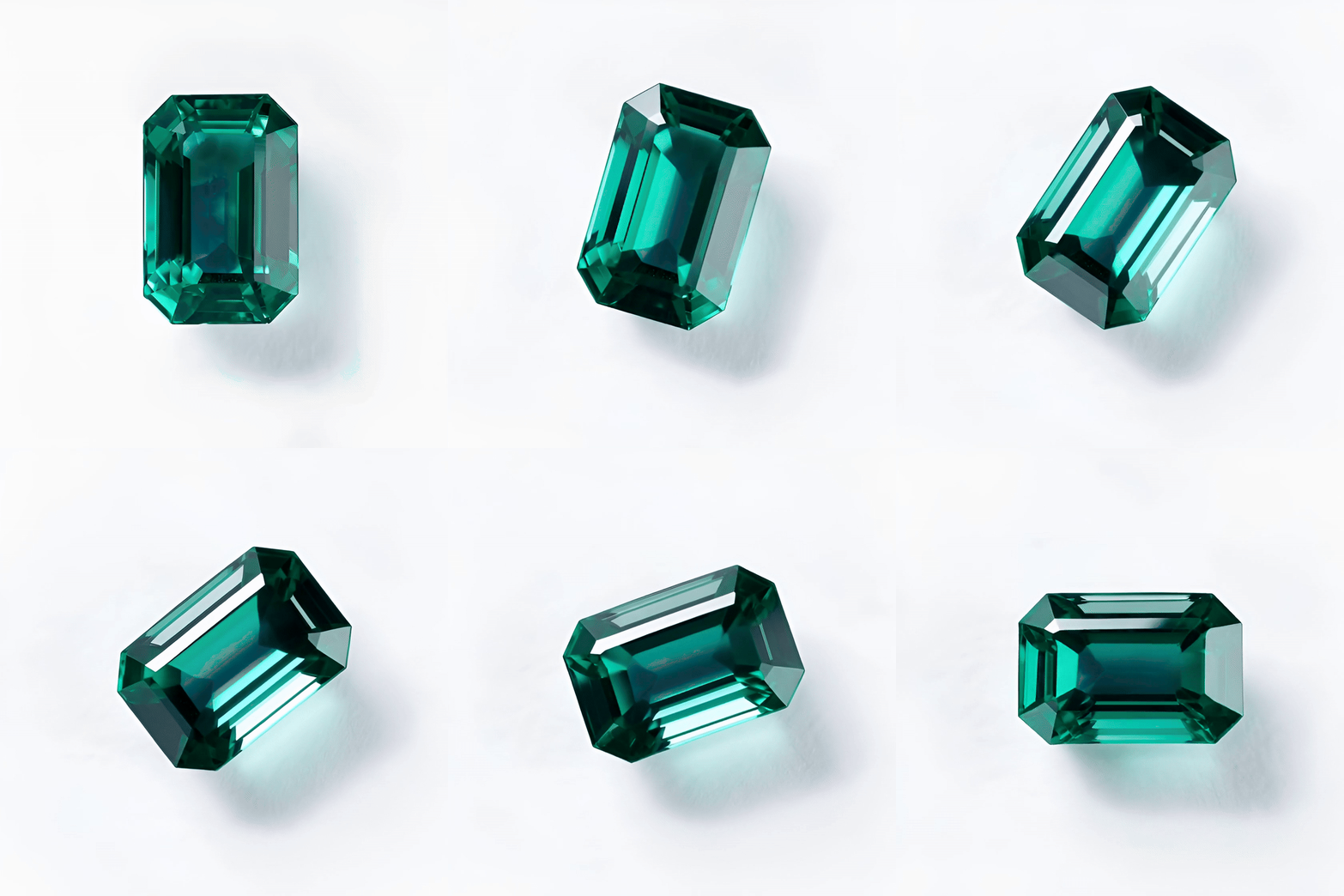
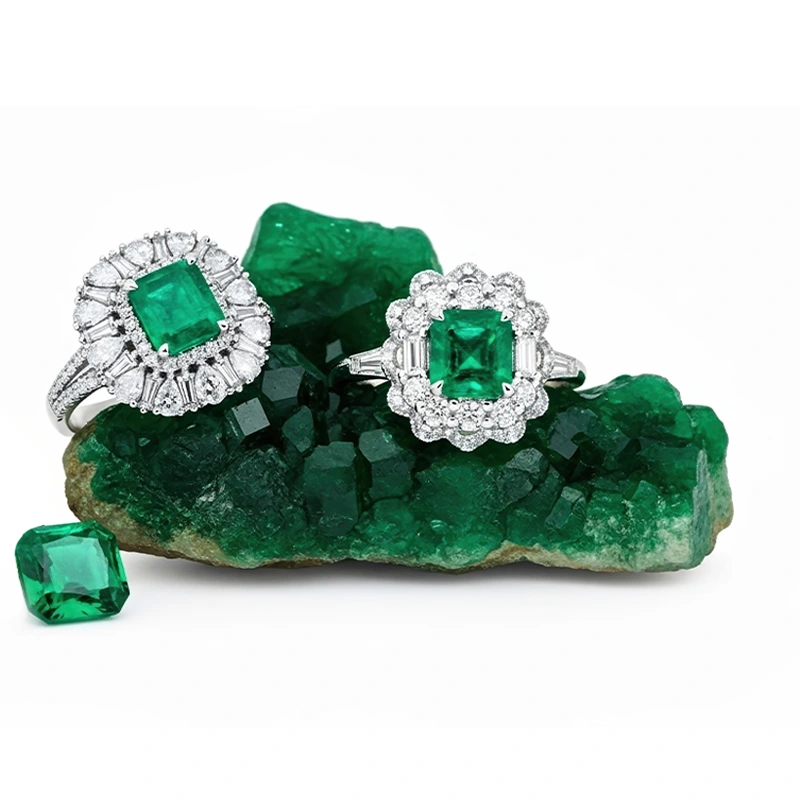
Color and Appearance: The best emeralds are a bright, grassy green with a hint of blue. Inclusions, often called “jardins” (French for garden), are common and can add character, unlike other gemstones where they are seen as flaws. Hardness and Durability: At 7.5–8 on the Mohs scale, emeralds are durable but are more prone to cracking than rubies or sapphires. Sources: Colombia produces the world’s most famous emeralds, known for their intense color. Other key regions include Zambia, Brazil, and Afghanistan. Value Factors: The depth of green color is paramount, followed by clarity and size. Treatments such as oiling to improve clarity are standard. Symbolism and Uses: As the birthstone of May, emeralds sparkle in vintage-style earrings, necklaces, and rings. They are often combined with diamonds for contrast.
SAPPHIRE
THE PRECIOUS STONE OF WISDOM
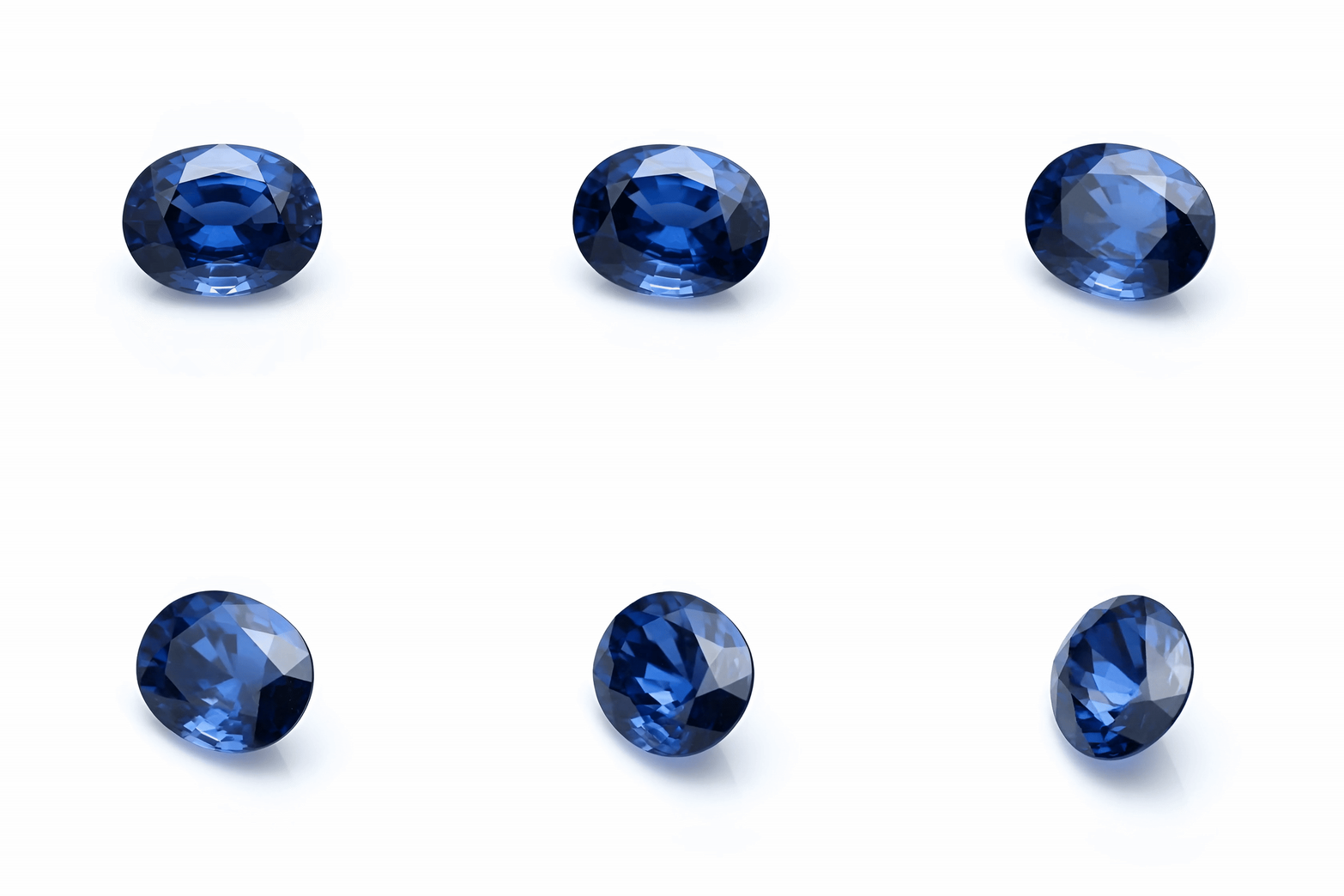
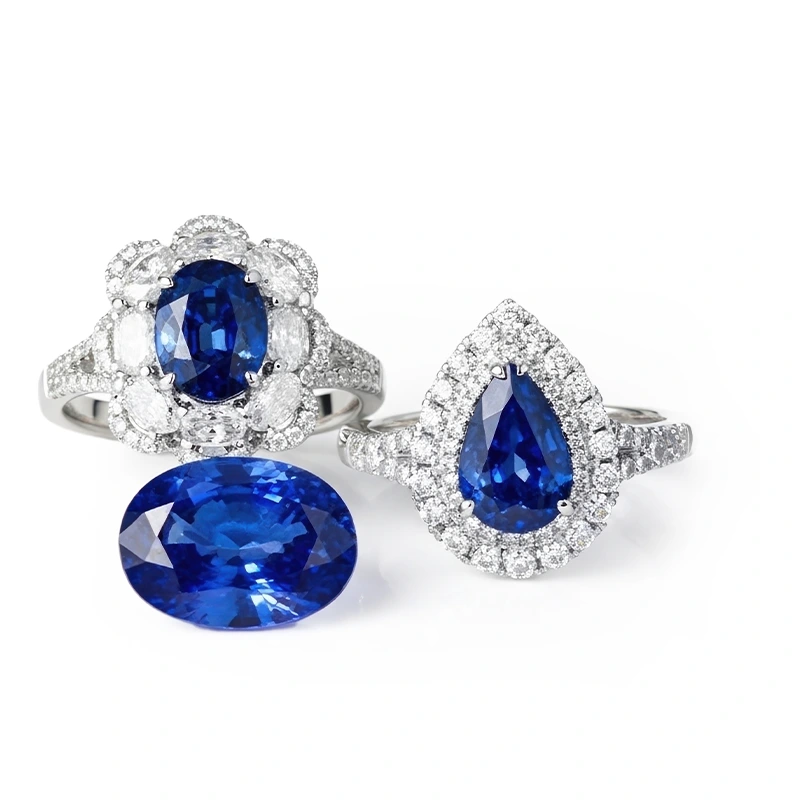
Sapphires are versatile and timeless, best known for their deep blue hues but available in a rainbow of colors (except red, which is ruby). They were worn by royalty and priests in ancient Persia and Greece, believed to bring divine favor and protection.
History
The ancient Persians believed that the sky was blue because it was reflected by giant sapphires supporting the earth. In medieval Europe, the clergy wore sapphire rings because the stone was believed to suppress sinful thoughts and attract divine favor. The Kashmir mines (discovered 1881–1887) produced the most valuable velvety blue sapphires in history; the deposits were depleted by the 1930s, making Kashmiri stones legendary and astronomically expensive today. The Star of India (563 carats, the largest known star sapphire) and the Star of Bombay are in the American Museum of Natural History, gifts from collectors who understood their historical significance. Royal favorites: from the ancient Seal of Solomon to the St. Edward's Sapphire in the British Crown Jewels (circa 11th century) to Princess Diana's (now Catherine's) iconic engagement ring.
Features
Color and Appearance: Classic blue sapphires range from velvety cornflower blue to midnight blue. “Fantastic” sapphires come in pink, yellow, orange (padparadscha) and even colorless varieties. Hardness and Durability: Like rubies, they are rated 9 on the Mohs scale, offering excellent durability for everyday jewelry such as bracelets, rings, earrings and necklaces. Sources: Leading producers include Sri Lanka (Ceylon), Kashmir (rare and valuable), Madagascar, Thailand, Australia and the U.S. state of Montana. Heat treatment is common to enhance color. Factors Determining Value: For blue colors, a rich, even tone with no gray is ideal. Rarity drives up prices for unheated or unique colors. The cut is crucial to the play of light, especially in star sapphires that exhibit asterism (a star-like effect).Symbolism and Uses: September birthstones gained modern fame through Princess Diana’s (now Kate Middleton’s) engagement ring. They are versatile in all types of jewelry.These gemstones are more than just adornments – they are parts of Earth’s history, formed under immense pressure over millions of years. At DITANI, we select our gemstones by working with rare and precious, rich in color and full of life.
Are you inspired by natural stones?
Browse our selection of exquisite sapphire, emerald, and ruby rings – designs designed to highlight your individuality and style.
 Rings with gemstones
 Pendants
 Rings
Rings Bracelets
 Crosses
 Earrings
 Engagement rings
 Anniversary rings
 Anniversary rings with precious stones
 Eternity rings
 Curved rings
 Stackable rings
 Collection Flora Elegance
 Collection Virtuosa
